
The Brief
The Client & Concept
This conceptual project was inspired by the idea that travel becomes far more meaningful when people understand the places they visit.
Too often, destinations are reduced to famous landmarks, popular restaurants, and social media highlights, leaving little room to appreciate the history, culture, traditions, and people that define them. Stories Around the World was created to change that by sharing the stories behind each destination and encouraging a deeper connection through understanding rather than sightseeing alone.
Each article aims to answer not only what visitors can see, but also why a place exists, how it became part of the local culture, and what it reveals about the people and cultures that define it.
The Challenge
Most travel websites compete by publishing destination guides, itineraries, and lists of attractions, making it difficult to establish a distinctive identity.
The challenge was to create a brand that positioned storytelling, not tourism, as the core of the experience. Every element, from the visual identity and messaging to the website structure, needed to encourage curiosity, longer reading sessions, and deeper exploration while remaining intuitive to navigate.
Because the website would rely on editorial content, it also needed a scalable structure capable of organizing articles across destinations, themes, and cultural topics while supporting long-term content growth.
Services Provided
To support these objectives, the following services were provided:
- Brand Development (Brand Positioning, Naming, Messaging, Identity)
- Visual Identity Design (Logo, Color Palette, Typography)
- Website Strategy
- Information Architecture
- Blog structure implementation
- Website Design and Development
- Search Engine Optimization (SEO)
The Objective
The project required creating both a distinctive editorial brand and a content-focused website.
The brand needed to communicate curiosity, authenticity, and cultural discovery while differentiating itself from traditional travel blogs focused primarily on attractions and travel planning.
The website needed to support long-form storytelling, organize content into a clear, intuitive structure, encourage readers to discover related stories, and provide a scalable foundation for continuous publishing and long-term organic growth.
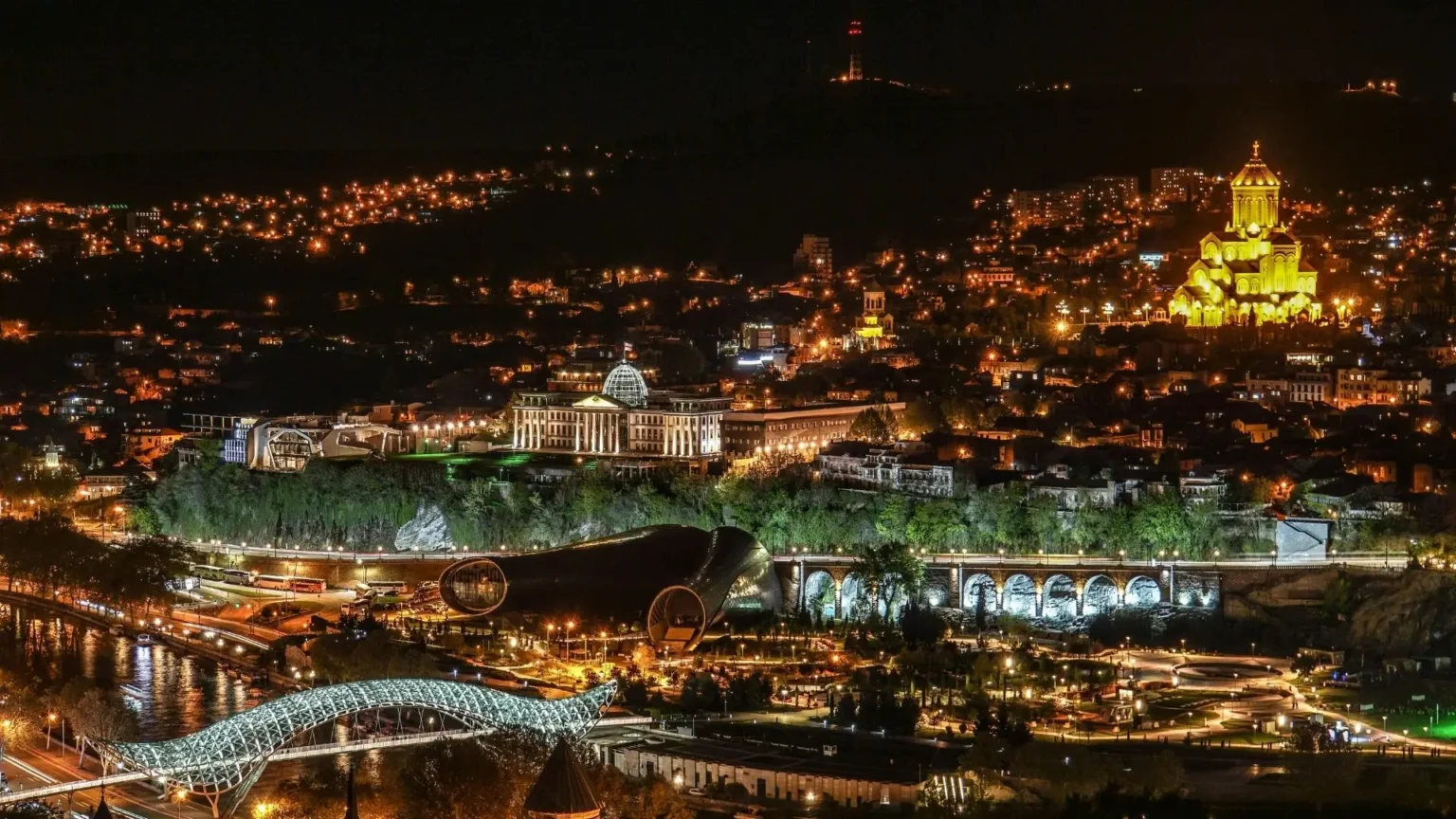
Brand Development
Brand Positioning
The brand was positioned around a simple belief:
Every place has a story waiting to be understood.
Instead of treating travel as a collection of attractions and recommendations, Stories Around the World encourages readers to discover the history, traditions, architecture, food, and people that give each destination its identity.
By shifting the question from “What should I see here?” to “Why is this place the way it is?”, the brand invites readers to experience travel with greater curiosity and understanding.
The target audience includes travelers looking to better understand the places they visit, as well as readers who simply enjoy discovering different cultures, histories, and traditions from around the world.
Brand Message
The messaging was developed to communicate that travel is ultimately about understanding people, cultures, and experiences.
The tagline “About People, Culture and Places” intentionally shifts attention away from attractions and tourism, placing the focus on the human side of travel.
By highlighting these three elements, the messaging captures the blog’s perspective while setting clear expectations for the type of content readers will discover throughout the website.
Naming
The name Stories Around the World was chosen for its clarity and memorability, immediately communicating the brand’s focus on storytelling rather than conventional travel content.
Its descriptive nature makes the purpose of the blog instantly recognizable, while remaining broad enough to support stories from any destination, culture, or topic explored in the future.
To create a cleaner and more versatile visual identity, the brand was abbreviated to SAW. Beyond improving usability across the website and branded materials, the abbreviation adds a subtle layer of meaning. As the past tense of the verb to see, SAW naturally evokes travel, observation, and lived experience, reinforcing the brand’s curiosity-driven approach to exploring the world.
Visual Identity
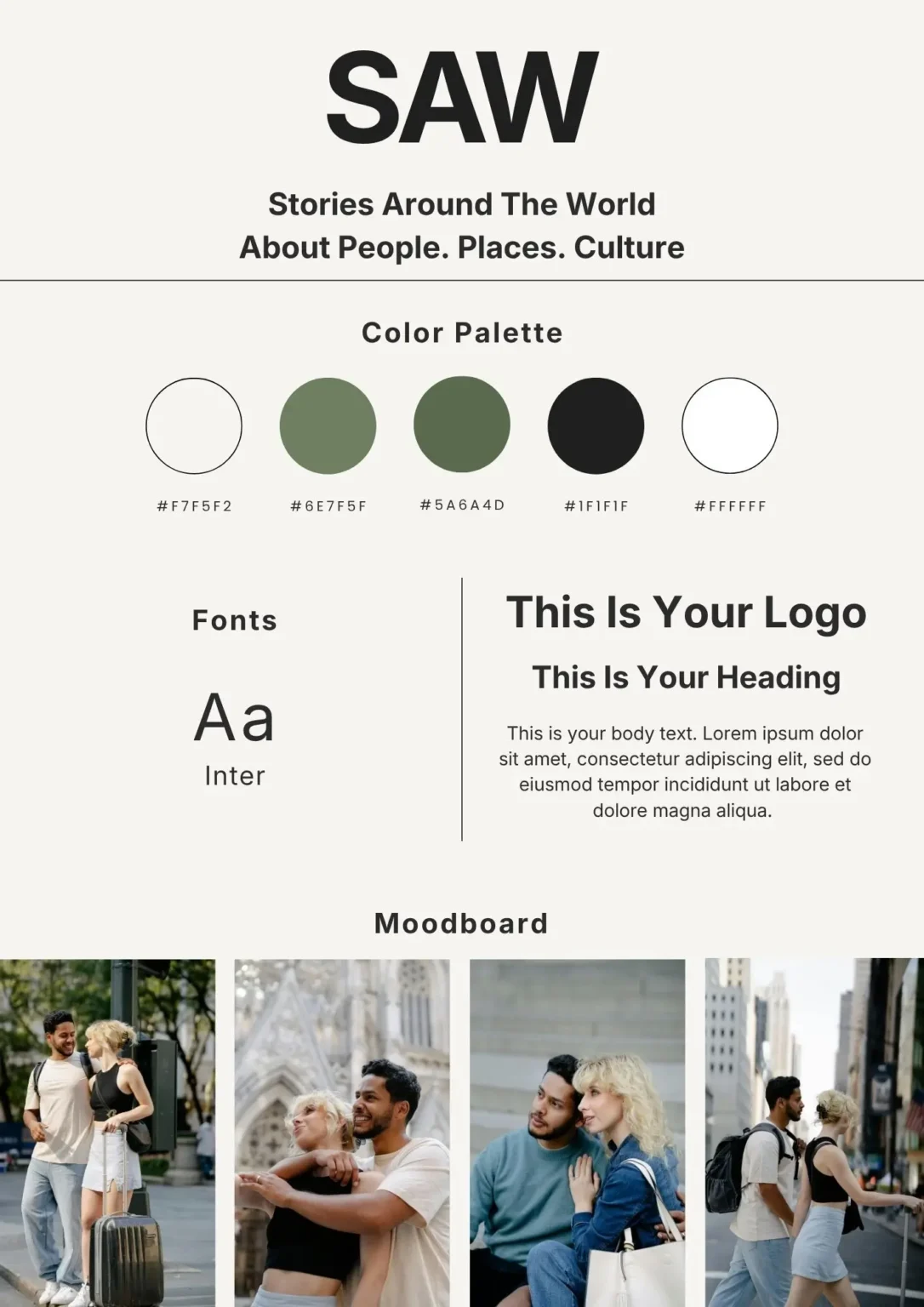
The visual identity was intentionally reduced to the essentials so that the stories and photography become the defining elements of the brand.
Logo Design
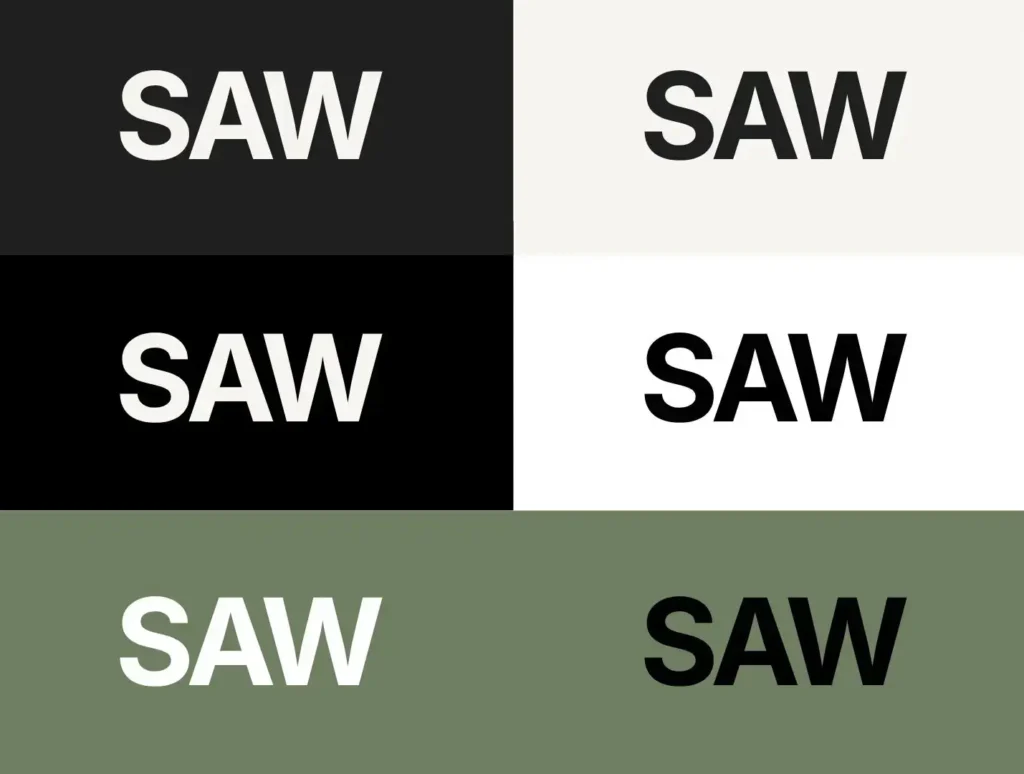
The logo features the abbreviated form of the name, SAW, in a bold, simple wordmark built with the Inter typeface.
Using the short form creates a more recognizable identity that works naturally across the website, social media, and future branded materials. Its clean typographic construction gives the brand a contemporary, timeless character without relying on decorative elements.
Color Palette
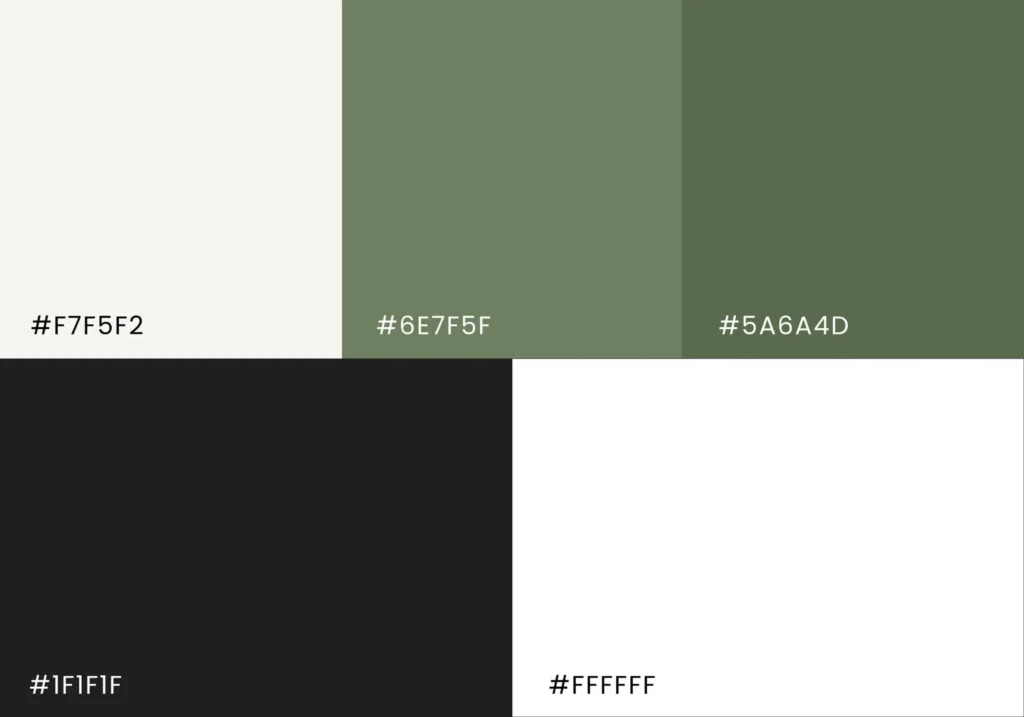
The palette is built around muted sage greens, supported by warm neutrals and dark charcoal tones.
The green tones were chosen for their calm and natural character, reflecting the blog’s slower and more thoughtful approach to travel. Rather than encouraging rushed sightseeing, the color palette supports the idea of taking time to understand and appreciate the places, cultures, and experiences behind each story.
To complement the green colors, warm neutrals were introduced to bring balance and create a softer visual foundation, while the dark charcoal provides contrast and improves readability across digital applications.
Typography
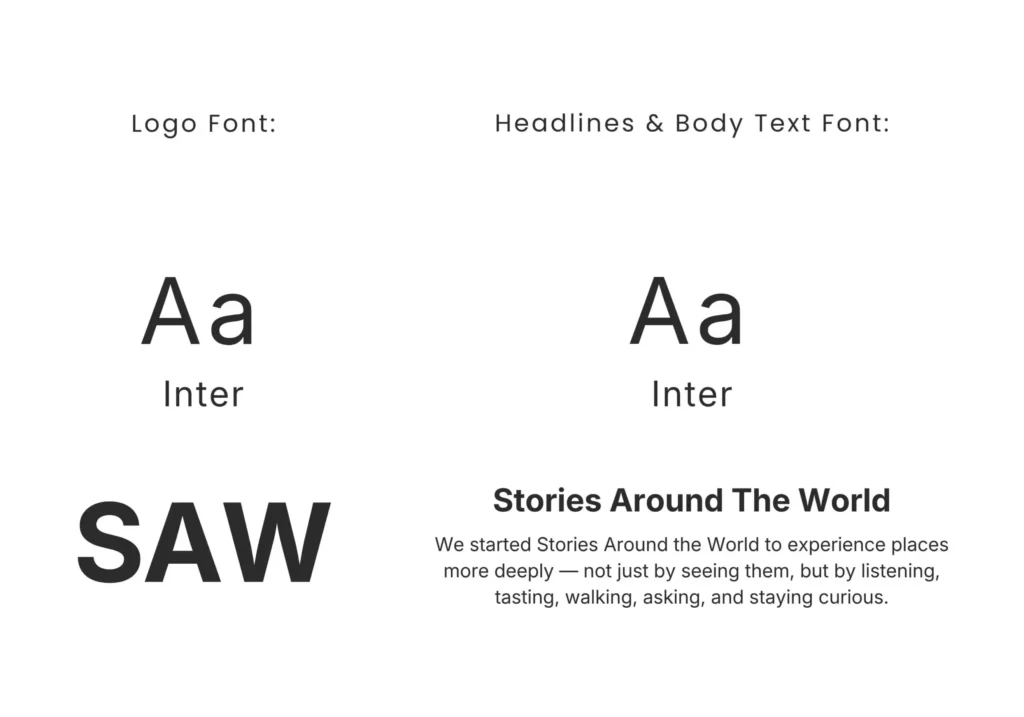
Inter is the only typeface used throughout the brand, from the logo and headings to the body copy. Chosen for its clean, contemporary appearance and excellent readability, it supports long-form reading without drawing attention away from the content.
Because the blog is built around stories and photography, the typography was intentionally kept simple, creating a cohesive visual system without introducing unnecessary visual complexity.
Applying My 4-Pillar Website Framework
Every website I build is guided by four principles: business goals, brand alignment, user experience, and SEO.
01. Business Goals
Because content is the core of the blog, the website needed to support an experience that encouraged readers to stay longer, discover more articles, and return as new content was published.
To achieve this, the website was designed to:
• Publish and organize travel stories effectively.
• Encourage deeper exploration of destinations.
• Support long-form content reading.
• Build a recognizable travel brand.
• Create a scalable content structure for future articles.
• Support long-term organic growth through SEO.
02. Brand Alignment
The website was designed to reflect the blog’s slower, more thoughtful approach to travel.
Rather than relying on visually busy layouts or decorative elements, the design was intentionally kept simple so readers can focus on the stories and photography without unnecessary distractions.
This restrained visual approach encourages visitors to slow down, immerse themselves in each article, and experience every destination through its history, culture, and people rather than simply consuming information.
03. User Experience (UX)
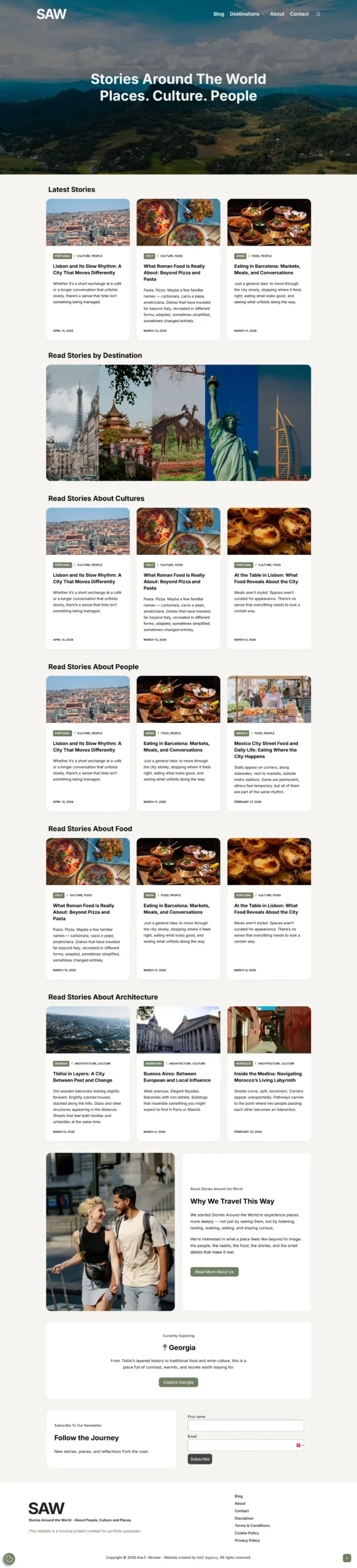
Because readers may arrive from search engines, social media, destination pages, or direct links, the website needed to support multiple paths to content discovery while making long-form articles enjoyable to read.
Instead of relying on a traditional chronological blog, articles were organized through destinations, regions, and thematic categories such as culture, food, and people. This allows readers to explore content based on both location and personal interests while creating natural opportunities to discover related articles.
Each article begins with a full-screen hero image that immediately introduces the destination and sets the tone for the reading experience. Large photographs continue throughout the article, complementing the written content and helping readers stay immersed as they move through the story.
04. SEO & Performance Optimization
From the earliest stages of the project, SEO was treated as a core part of the website strategy.
The website architecture was designed around a scalable content structure supported by logical heading hierarchy, optimized metadata, clean URLs, internal linking, and mobile-first development. Together, these decisions create a strong technical foundation for future publishing while making it easier for both readers and search engines to navigate the site.
Performance optimization was also prioritized through lightweight page structures, responsive layouts, optimized imagery, and clean development practices, helping the website achieve strong PageSpeed Insights and Core Web Vitals scores.
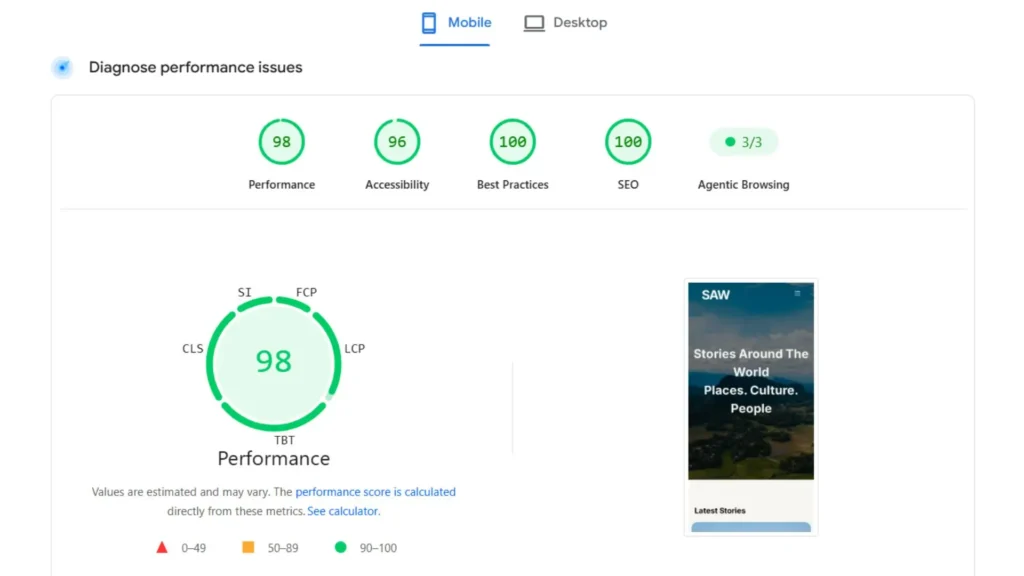
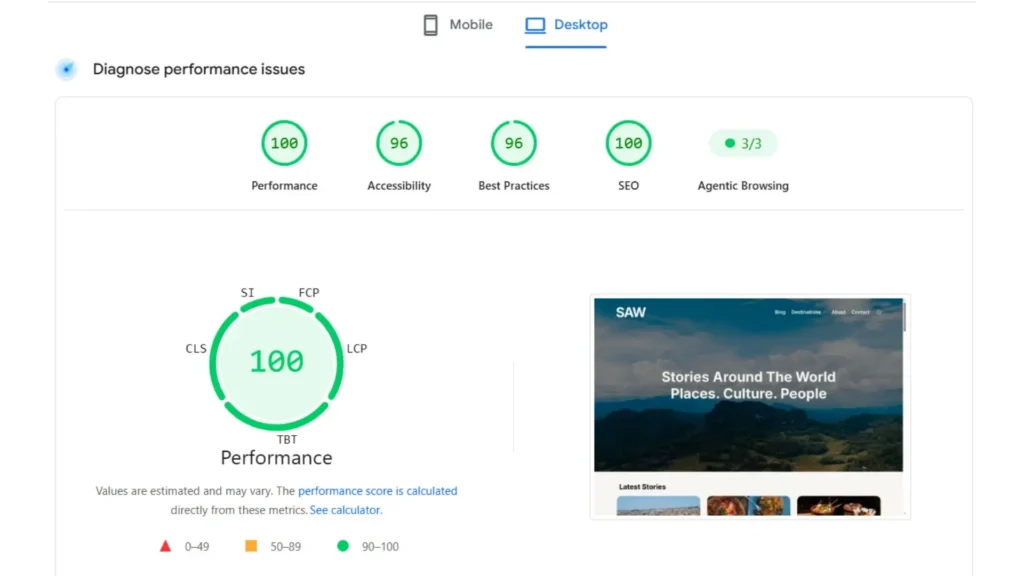
Note: This project is intentionally excluded from search engine indexing through the robots.txt file, which may affect Lighthouse SEO scoring. Aside from this intentional configuration, the website follows the same technical SEO standards and best practices applied to commercial projects.

Design & Development
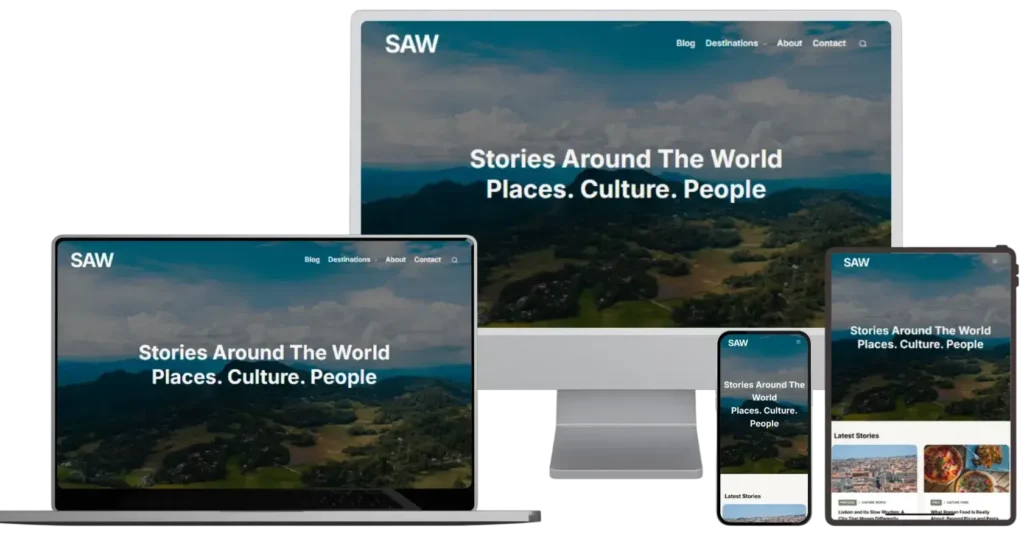
The website was custom designed and developed in WordPress using Elementor and Blocksy.
The publishing structure was built to support continuous growth, making it easy to organize articles by destination and topic while maintaining clear navigation as the publication expands.
Careful attention was also given to responsiveness, accessibility, and performance, ensuring a consistent reading experience across desktops, tablets, and mobile devices.
The Outcome
Stories Around the World evolved from a simple travel blog concept into a distinctive editorial publication centered on culture, history, and meaningful exploration.
By combining strategic brand positioning with a content-first website, the project creates an experience that encourages readers not only to discover new destinations, but to understand the people, traditions, and stories that shape them.
The result is a cohesive brand and scalable publishing platform with a strong foundation for long-term content growth, providing readers with an engaging and immersive experience across every touchpoint.
Ready for a Website That Supports Your Business?
Book a free consultation to discuss your business, your goals, and the website you want to build.