
The Brief
The Client & Concept
This conceptual project was created around the idea of an interior design studio specializing in Mid-Century Modern interiors.
Inspired by one of the most iconic design movements of the twentieth century, the studio creates spaces that combine timeless aesthetics with everyday functionality. Clean lines, organic forms, carefully selected materials, and a palette of warm natural tones come together to create interiors that feel welcoming, balanced, and designed to stand the test of time.
The studio’s approach stays true to the principles of Mid-Century Modern design while thoughtfully adapting them to the needs and lifestyles of contemporary living.
The Challenge
Although the studio had a clear design philosophy, it lacked a brand identity and online presence that reflected its expertise and distinctive approach.
The challenge was to create a brand that positioned MCM Studio as a trusted authority in Mid-Century Modern interior design while communicating its craftsmanship, attention to detail, and timeless design principles.
Beyond establishing a memorable visual identity, the project also involved designing and developing a website that showcases the studio’s portfolio, presents its services, communicates its design philosophy, builds credibility with potential clients, and provides a simple way to enquire about new projects.
Services Provided
To support these objectives, the following services were provided:
- Brand Development (Brand Positioning, Naming, Messaging, Identity)
- Visual Identity Design (Logo, Color Palette, Typography)
- Website Strategy
- Information Architecture
- Blog structure implementation
- Website Design and Development
- Search Engine Optimization (SEO)
The Objective
The project had two primary objectives.
The first was to establish MCM Studio as a recognizable brand with a clear and distinctive identity that reflects the timeless character of Mid-Century Modern design while creating a strong foundation for future growth.
The second was to create a website that inspires confidence through the studio’s work, encourages visitors to explore completed projects, and provides a seamless path from discovering the studio to making an enquiry.
Brand Positioning
The brand was positioned around a simple idea:
Good design should feel as timeless tomorrow as it does today.
Inspired by the enduring principles of Mid-Century Modern design, MCM Studio creates interiors that combine functionality, craftsmanship, and natural materials to produce spaces with lasting character. Instead of following short-lived trends, the studio embraces a design philosophy centered on simplicity, balance, and timeless appeal.
The target audience includes homeowners, hospitality businesses, and commercial clients who appreciate Mid-Century Modern design and are looking for interiors that balance aesthetics with everyday functionality.
Brand Message
The brand message was developed to communicate MCM Studio’s approach to creating interiors that combine timeless aesthetics with contemporary living.
The tagline “Mid-Century Modern Interiors, Designed for Today” highlights the studio’s specialization while emphasizing that the work is not about recreating the past, but adapting Mid-Century Modern principles to contemporary lifestyles.
Supported by the headline “Timeless Interiors, Thoughtfully Designed,” the messaging reinforces the studio’s commitment to functionality, craftsmanship, and carefully considered spaces that remain relevant for years to come.
Naming
The name MCM Studio is a concise abbreviation of Mid-Century Modern, immediately communicating the studio’s area of expertise while remaining clean, memorable, and easy to recognize.
Using the abbreviation gives the brand a contemporary, professional feel without sacrificing clarity.
Paired with the word Studio, the name reinforces the business as a dedicated interior design practice rather than a personal portfolio, helping position the brand as an established interior design business.
Visual Identity
The visual identity was designed to reflect the principles that define Mid-Century Modern design: simplicity, functionality, balance, and timelessnes
Logo Design
The logo, combining a geometric icon with a condensed wordmark, was designed to reflect the studio’s focus on structure, balance, and timeless design.
Built around a simple geometric frame, the icon conveys precision and architectural order while drawing inspiration from the clean lines and functional principles that define Mid-Century Modern design.
The wordmark uses Donau, chosen for its condensed proportions and distinctive geometric character. Its architectural letterforms complement the icon while giving the identity a confident, recognizable presence.
Color Palette
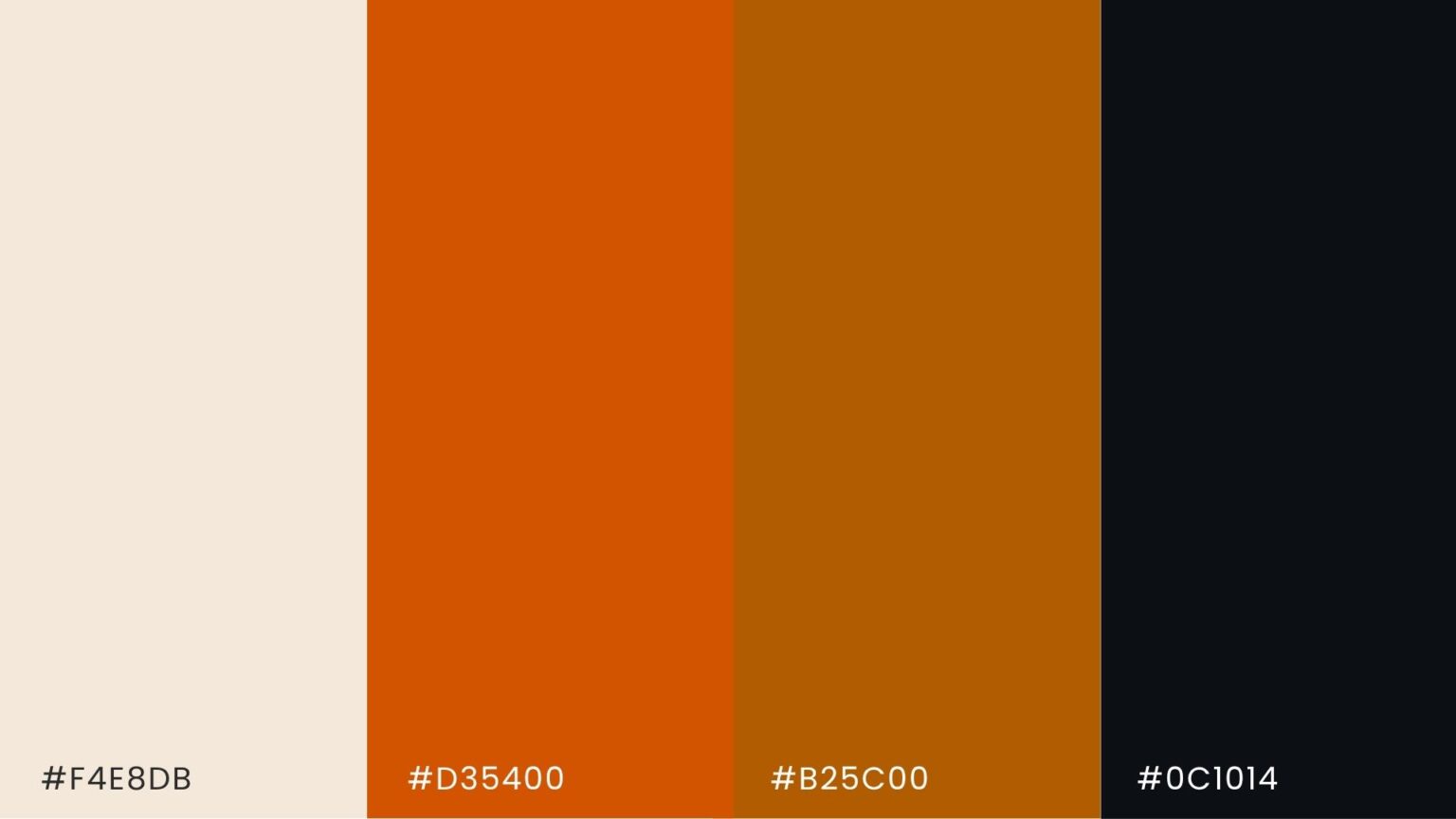
The color palette draws inspiration from the natural materials and warm atmosphere that define Mid-Century Modern interiors.
Warm neutrals and earthy tones reference materials such as wood, leather, and stone, creating a direct connection between the brand identity and the spaces the studio designs.
Darker accents introduce contrast and visual structure while allowing portfolio imagery to remain the primary focus throughout the website, ensuring the interiors themselves become the strongest expression of the brand.
Typography
The typography system was designed to reflect the studio’s architectural character while supporting a clean and timeless visual identity.
Donau is used exclusively for the logo, where its condensed proportions and geometric letterforms create a distinctive and memorable brand mark.
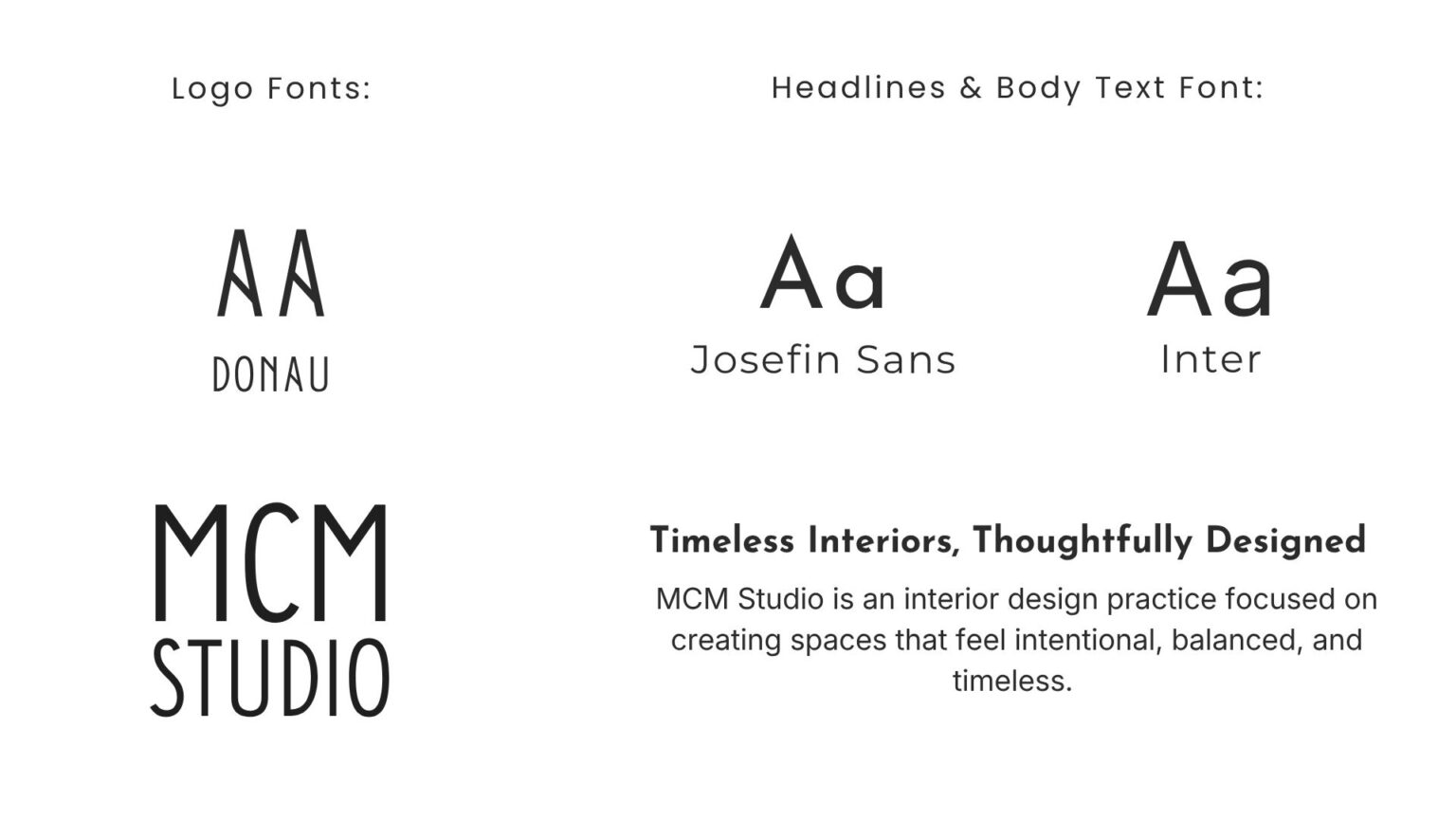
Josefin Sans serves as the primary display typeface for headings. Its refined geometric forms complement the Mid-Century Modern aesthetic while giving the website a clear visual hierarchy and distinctive character.
Inter is used for body copy, providing excellent readability across all devices. Its neutral appearance allows the portfolio and interior photography to remain the primary focus while ensuring longer sections of content are comfortable to read.
Applying My Four-Pillar Website Framework
Every website I build is guided by four principles: business goals, brand alignment, user experience, and SEO.
01. Business Goals
The website needed to function as more than a portfolio. Its primary purpose was to help potential clients understand the studio’s design philosophy, explore previous work, and take the next step toward working with the business.
To support these goals, the website was designed to:
- Showcase interior design projects professionally.
- Communicate the studio’s Mid-Century
- Modern specialization.
- Explain services and the design process clearly.
- Establish credibility through project presentations and supporting content.
- Create a simple inquiry process for prospective clients.
- Support long-term visibility through SEO and educational content.
To achieve these, the website was structured as a multi-page experience that combines service pages, project case studies, educational content, and supporting business information designed to both inspire and convert.
02. Brand Alignment
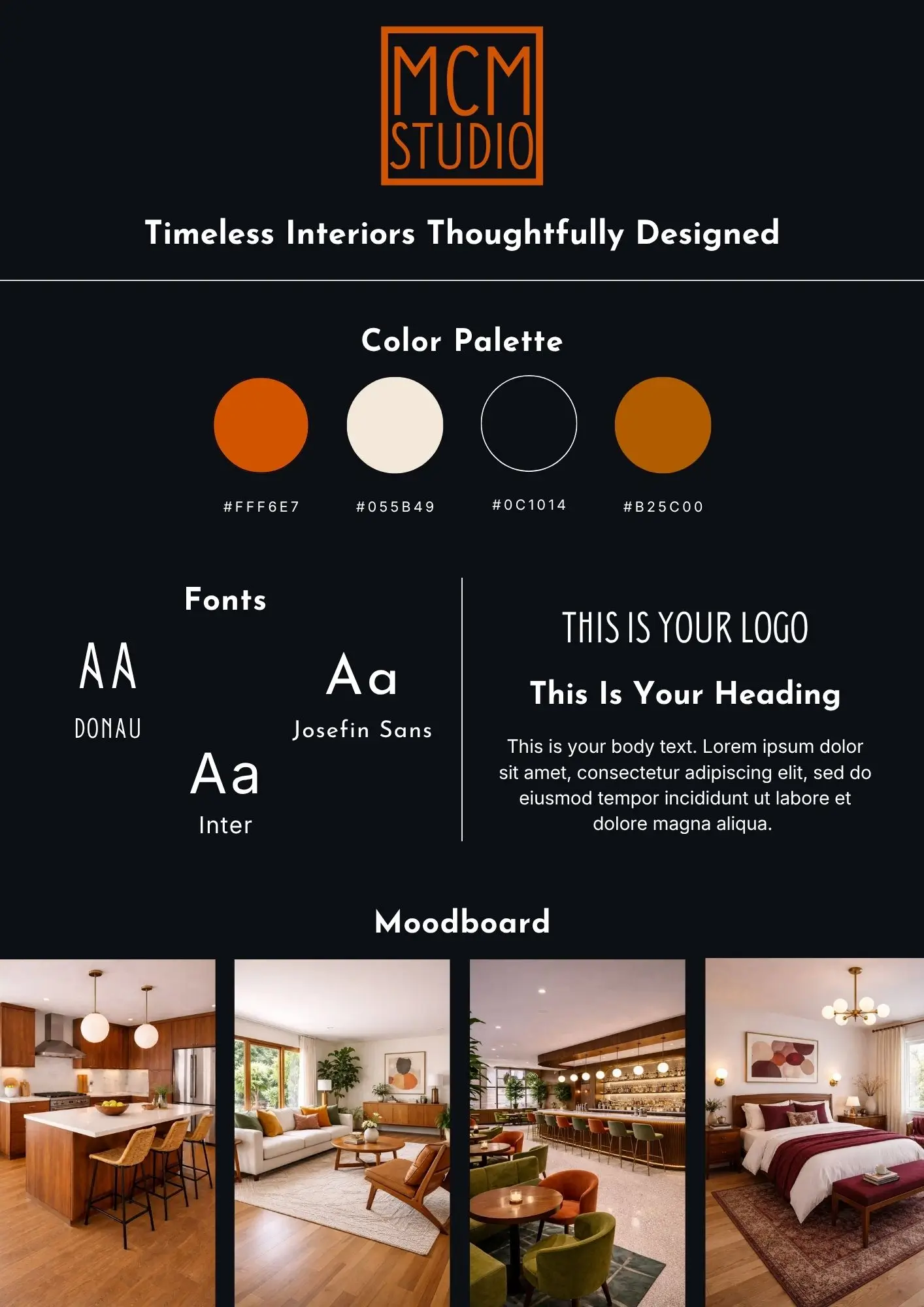
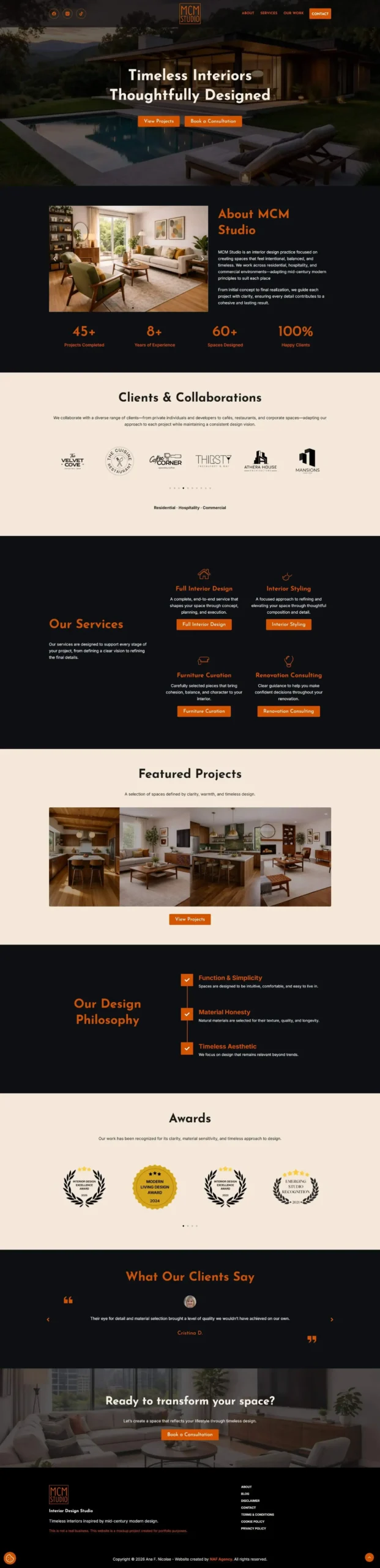
The website was designed to reflect the same principles that define Mid-Century Modern design: simplicity, functionality, balance, and timelessness.
Clean layouts, generous spacing, restrained use of color, and carefully organized content create an interface that feels calm and architectural without distracting from the studio’s work.
Every design decision was made to support the portfolio, allowing each project to communicate its character through photography while creating a browsing experience that feels intentional and refined.
03. User Experience (UX)
The user experience was designed around the needs of potential clients researching interior design services.
The website structure helps visitors understand the studio’s specialization, explore previous work, learn about available services, and contact the business.
Portfolio projects are organized into residential, hospitality, and commercial categories, allowing visitors to quickly find examples relevant to their own projects.
This structure creates a more focused browsing experience while making it easier for potential clients to evaluate whether the studio is the right fit for their needs.
04. SEO & Performance Optimization
SEO was integrated into the project’s structure from the beginning to support both service visibility and long-term content growth.
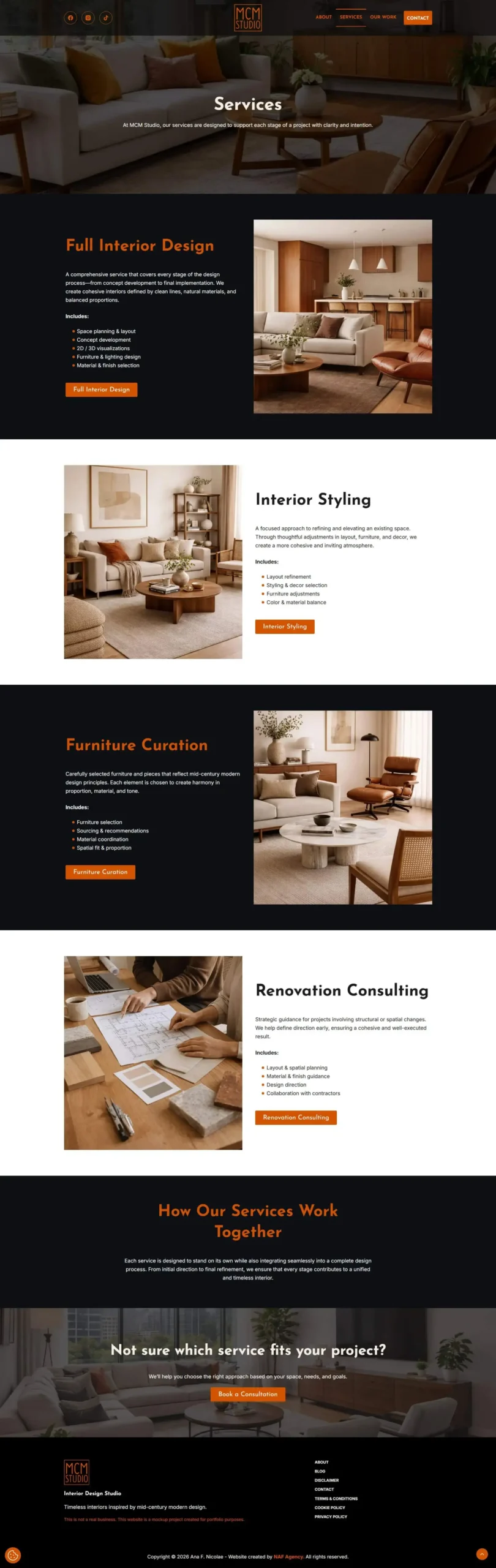
Dedicated service pages, individual project case studies, educational blog content, internal linking, metadata implementation, and a logical site architecture were all incorporated to create multiple opportunities for organic discovery.
Rather than relying solely on portfolio work, the website was designed to attract visitors through both service-related searches and educational interior design content.
Design & Development
The website was custom designed and developed in WordPress using Elementor and Blocksy.
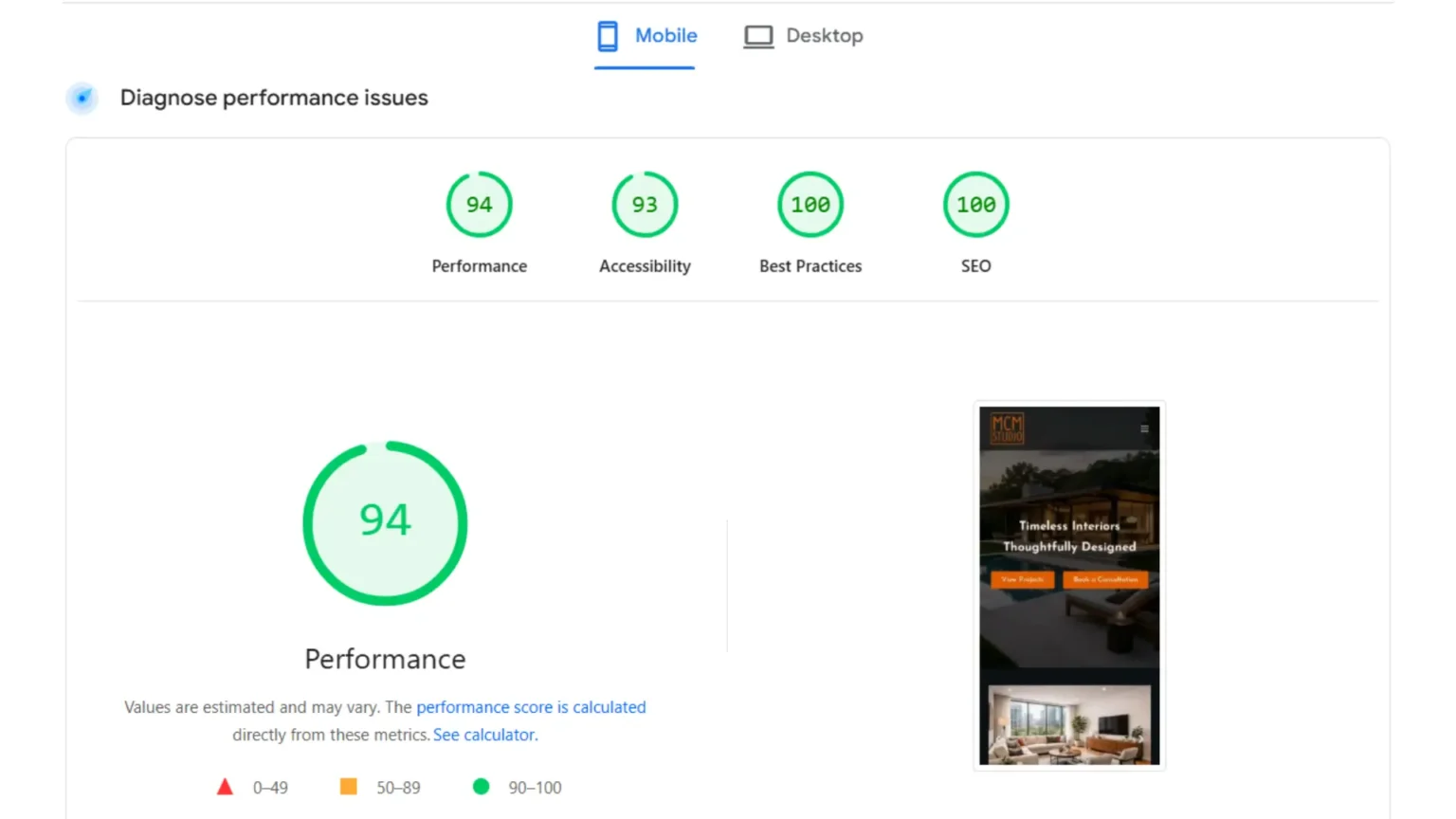
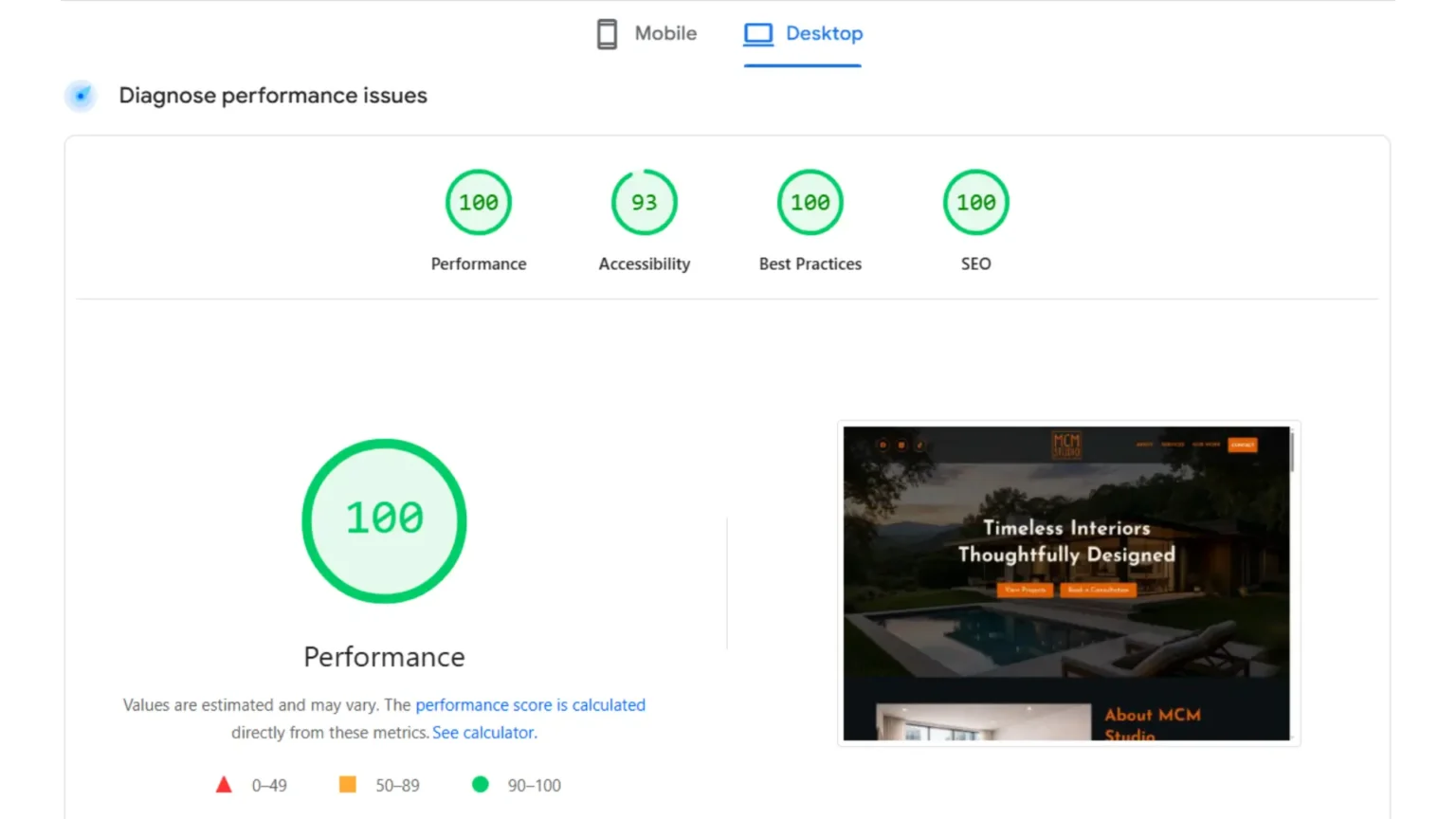
The build focused on creating a scalable platform capable of supporting portfolio content, service pages, and future educational content. Performance optimization, accessibility, responsive design, and Core Web Vitals were considered throughout development to ensure a consistent experience across devices.
Note: This project is intentionally excluded from search engine indexing using the robots.txt file, which may affect the Lighthouse SEO score. Aside from this intentional configuration, the website follows the same technical SEO standards and best practices I apply to real commercial projects.
The Outcome
The project resulted in a complete digital presence for a specialized interior design studio, combining strategic branding with a website that showcases both expertise and portfolio work.
Together, these elements position MCM Studio as a focused Mid-Century Modern practice while providing a scalable platform capable of supporting future marketing, content, and business growth.
Ready To Grow?
If you’re looking for a website that reflects your brand, supports your business, and provides a strong user experience — let’s talk.